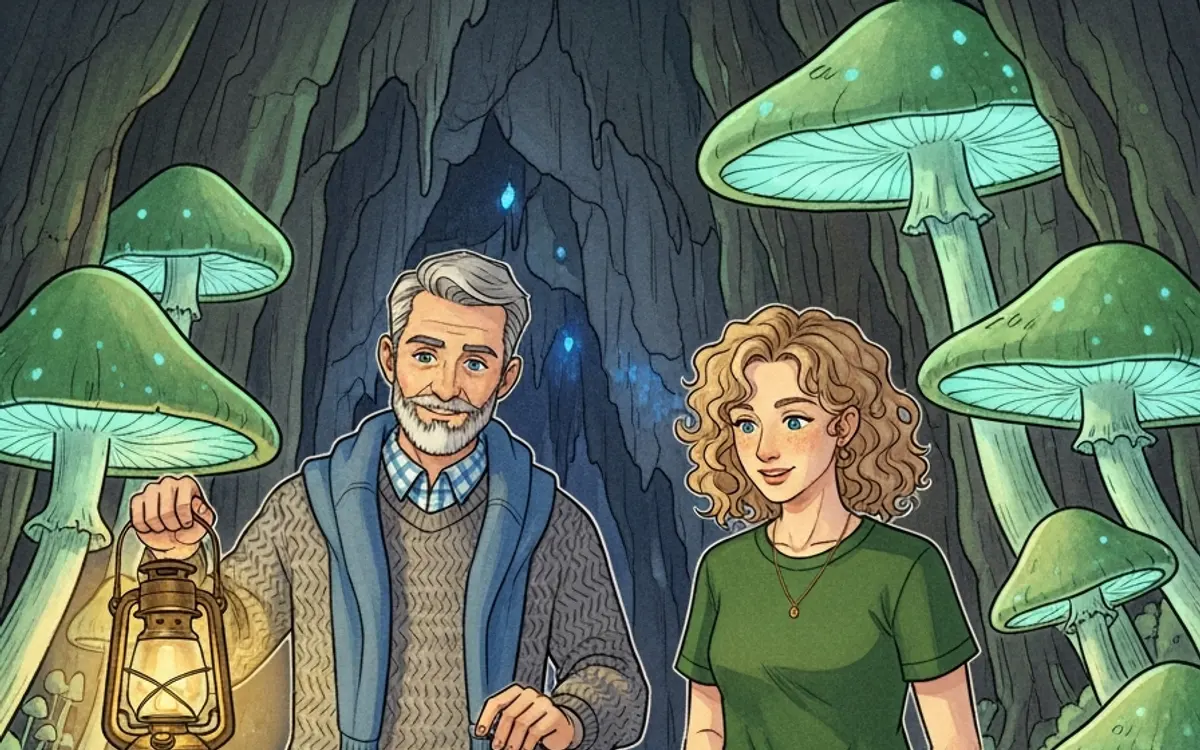
Search for a personalized gift book and most of what comes back is the same product wearing different covers. One story, written once, sold a few thousand times, with a name field at checkout. Somewhere in the results sits a genuinely different kind of thing, a custom storybook written around the actual person it is for, and the two are easy to confuse because the ads use nearly identical language.
They are not the same purchase. One is a greeting card with more pages. The other is a book that did not exist until you described someone to it.
What a template book actually gives you
A template book starts with a finished manuscript. Someone wrote "You Are So Loved" or "The Night You Were Born" once, and that same text, the same plot beats, the same jokes, ships to every buyer. What changes is a handful of variables: the child's name gets dropped into the sentences, maybe a hair colour or a pet's name slots into one line, and an illustrated character that loosely resembles a kid gets swapped for a different loosely-resembling character.
This is not a trick. It is a real production model, and it works for what it is. The company wrote one good story and built a system to personalize the edges of it, which is why these books are cheap and arrive fast. The limitation is baked into the method, not the execution: the plot was never about your person, so it cannot become more about them no matter how many fields you fill in.
What a custom storybook changes about that
A custom storybook does not start with a manuscript. It starts with you, specifically, the photos you send and the handful of sentences you write about the person the book is for. The story gets written from that brief rather than fitted around it, which is the actual difference buyers are groping toward when they search for something "more personal" than the name-insertion kind.
At Fableself this comes as one edition: a hardcover of at least 30 pages with 13 illustrated spreads, built around up to six characters. The story and the artwork are generated with AI from the photos and the brief, and every page is checked by a person before it reaches you as a digital proof. Nothing goes to print until that proof is approved; the how it works page walks through every step between the order and that proof landing in your inbox. It takes about 15 business days from order to door, because a story has to be written and reviewed rather than pulled off a shelf.
The character on the page is drawn from an actual photo of an actual person, which is the one thing a template book cannot offer no matter how many customization fields it adds. A name field changes a word. It does not change a face.
The real differences, side by side
Put a template book and a custom storybook next to each other and the gap shows up in three places.
The likeness is the first. A template illustration is a stock character with a palette swapped to approximate hair or skin tone. This one's illustration comes from your photos, so the face on the page is recognisably the person, not an approximation of a category they fall into.
The plot is the second. A template story was finished before you existed as a customer. This one's plot is built from the detail you actually sent in, which is why two Fableself books never read the same way even when two different families order the same style.
The edition is the third, and it is the one people underestimate. A template book is one of a print run in the tens of thousands. This one is made once, for one order, and does not exist in that exact form anywhere else.
Price and what you're paying for
A template book is cheap because almost nothing about it is made to order. The writing happened once and the cost is spread across every copy sold since. That is a completely fair trade for a lower price, and it is worth being honest about rather than pretending the categories compete on the same terms.
A custom storybook costs more because a story gets written for this one order and every page gets reviewed by a person before anything prints. Current pricing is on the pricing page, and it is worth checking before assuming either kind of book costs what a different gift category usually costs. A second copy of the same book, for another relative who wants one, is cheaper than the first order since only the printing repeats.
When the template book is the right call
There is a real use case for the name-insertion kind, and it is not a lesser version of the other thing, just a different job. If the gift is for a toddler who will not remember the specifics, if the budget is tight, or if you need something to arrive in two days rather than fifteen, a template book does exactly what it promises and does it well. Nobody needs a bespoke storybook for every birthday every year.
When a custom storybook is worth the difference
The custom version earns its price when the book is meant to be kept rather than consumed, a first anniversary, a grandparent's gift, a baby's arrival, the kind of occasion where a generic plot with a swapped name would read as an afterthought no matter how nice the printing is.
The watercolour storybook style is the one most people reach for here, and it is worth understanding why. Soft washes and warm paper read as gentle at four years old and as tender at seventy, which is rare for an art style, and it is unusually forgiving of old or imperfect photographs, so a scanned print from decades ago works about as well as a photo taken this morning. It does not date either, so the book looks the same in ten years as it does the week it arrives, which matters more for a keepsake than for a toy.
If that sounds like the occasion you have in mind, the order form walks through the photos and the brief in about the time it takes to fill out a longer online form, and it is the same form behind every storybook Fableself makes.
The honest answer
Neither category is the trick and neither is the scam. A template book is a well-made, cheap, fast product that was never going to be about your specific person, because it was finished before that person was the customer. A custom storybook costs more and takes longer because it is written and illustrated after you describe someone real, not before. Knowing which one you are actually buying, before you compare prices across both, is the whole point of understanding the difference.