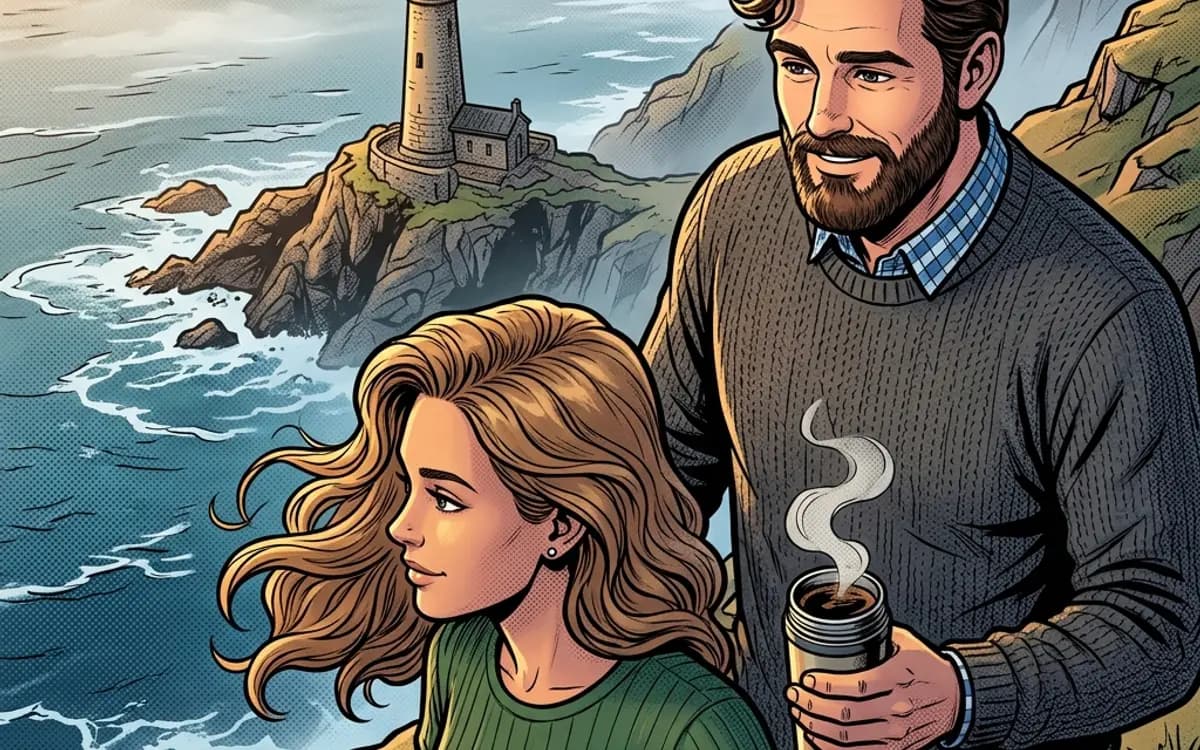
The perfume is half empty in a month. The flowers are out by Friday. Neither of them says anything about her, or about the two of you, and that is the actual problem with the shelf you are standing in front of. Every option on it says today is a special day. None of them says I know you.
What people are usually reaching for, when they say they want something personal, is something that will still be in the room next year.
What personalized means here, and what it usually means
Most things sold as personalized for a girlfriend are an object with her name added to it. A necklace with an initial, a print with a date, a mug with a photo. The name is on the thing; the thing itself would have been identical for anybody.
A book works the other way round. There is no book until there is a story, and the story comes from specifics you provide: where you actually met, the trip that fell apart, the argument that turned into a running joke, the flat with the terrible kitchen, the thing she claims to hate and clearly does not. Those become a written narrative, and the illustrations follow the scenes in it rather than putting her face into a stock frame.
The distinction is not marketing. It is the difference between an object with her name on it and an object that could not have existed for anyone else.
Why it outlasts perfume and jewellery
Jewellery is genuinely good at this and has one limitation: it carries no content. It says somebody spent money and thought of her. It cannot say which September, or what you said on the platform, or why the two of you still argue about the map.
A book has room for the afterwards. That is its entire advantage, and it is why it survives the year rather than the week.
If a friend picking it up would understand everything in it, it is not personal enough yet.
Choosing the memory
The instinct is to cover the whole relationship. Do not. Ten illustrated spreads is enough for one story with a beginning, a middle and an ending, and it is nowhere near enough for a highlights reel. Attempting the reel is the single most common way these go flat.
Pick one thing and tell it properly:
- The day it actually started, including the unglamorous part nobody puts in the version told at parties.
- The trip that went wrong. Disasters hold affection better than good days do, because there is something to survive.
- The small recurring thing. The Sunday routine, the argument about the thermostat, the specific way she says your name when she wants something.
- The move, the flat, the year that was hard, if you came out the other side of it.
Concrete beats sweeping every time. "She is my best friend" cannot be drawn. "She read the whole map upside down for forty minutes and refused to admit it" can.
Photographs, and which ones work
Faces need to be visible and reasonably lit. Beyond that the useful photos are not the posed ones. The good ones are usually slightly bad: mid-laugh, mid-sentence, in the kitchen, in the car, the picture nobody chose for anything. Those carry the way a person actually looks.
Send a few rather than one. Up to three characters fit in a book, so you, her and a dog all fit if the dog belongs in the story, which the dog usually does.
If it is meant to be a surprise
It can be, and the proof stage is what makes that possible. You see the whole book as a digital proof before anything is printed or charged, which means the only thing you need to keep quiet about is the photographs going somewhere. Nothing arrives at the door until you have said yes.
If you want her involved instead, choosing the art style together is a decent way to do it without giving away the story.
Picking a style that suits her
This is the choice people overthink, and the shortcut is to look at what she already likes on a wall or a bookshelf rather than at what feels romantic in the abstract.
Watercolour storybook is warm and soft and the safest good answer. Impressionist suits someone who likes paintings and atmosphere over sharp lines. Cinematic concept art is the dramatic one and works if your story has real scale in it, a move across a country, a long stretch apart. Art nouveau is the choice for someone with a strong visual eye. All twenty-four sit together on the styles page.
When to give it
Valentine's Day and an anniversary are the obvious two, and the Valentine's gift page is built for the first. But the version of this that lands hardest is usually the one with no occasion attached, handed over on an ordinary Tuesday, because it removes the last possible reading that you were working from a list.
Allow time either way. The proof takes a few days and printing and shipping sit on top of that, so this is not a gift you can start the night before.
Proof, price, and the last step
You send photos and a handful of concrete memories. A story gets written from them and illustrated page by page. A digital proof comes back and you read the whole thing. Only then is anything charged, and only then does it print.
Text and art are both produced with AI from what you send, and a person checks every page before it reaches you. Photos are not used to train any model and are deleted after the book ships.
The book is 24 pages, 10 illustrated double-page spreads, hardcover, up to three characters, $137.50 with shipping included. The pricing page is the version that stays current. A second copy of the same book is $77, which is worth knowing if you want one each, and SECONDBOOK15 takes another 15% off that second copy.
A personalized book for your girlfriend is not a better version of flowers. It is a different category of object: the one that is still on the shelf when the flowers, the perfume and the year are all long finished. Start one, or look at how it works first.
Where to go next
Gift guide
A Valentine's Day Gift That Isn't a Cliché →Styles that suit it
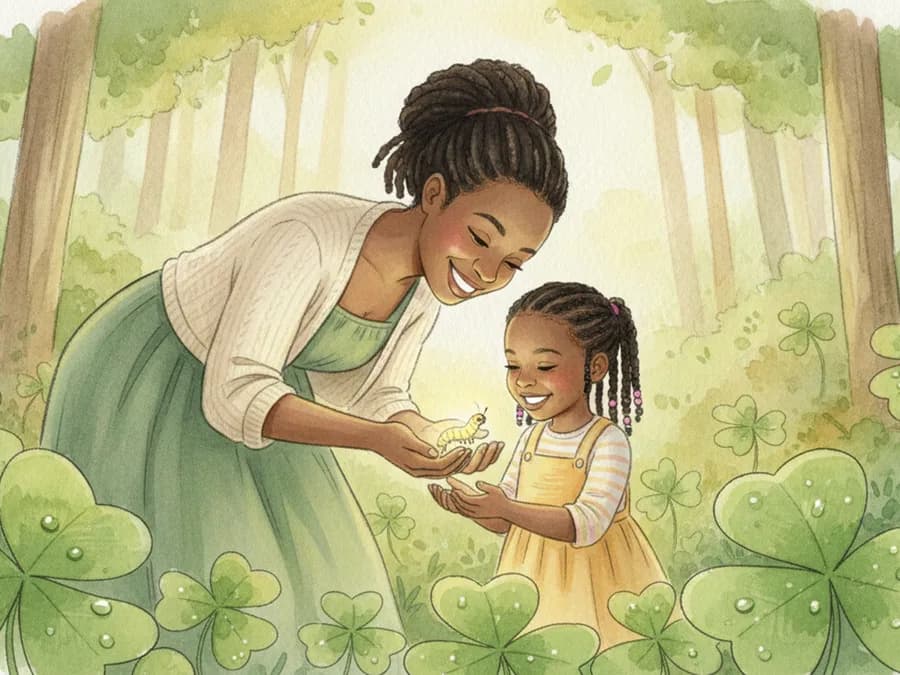
Watercolour Storybook
Soft washes and tender light, the classic picture-book feeling, painted warm.
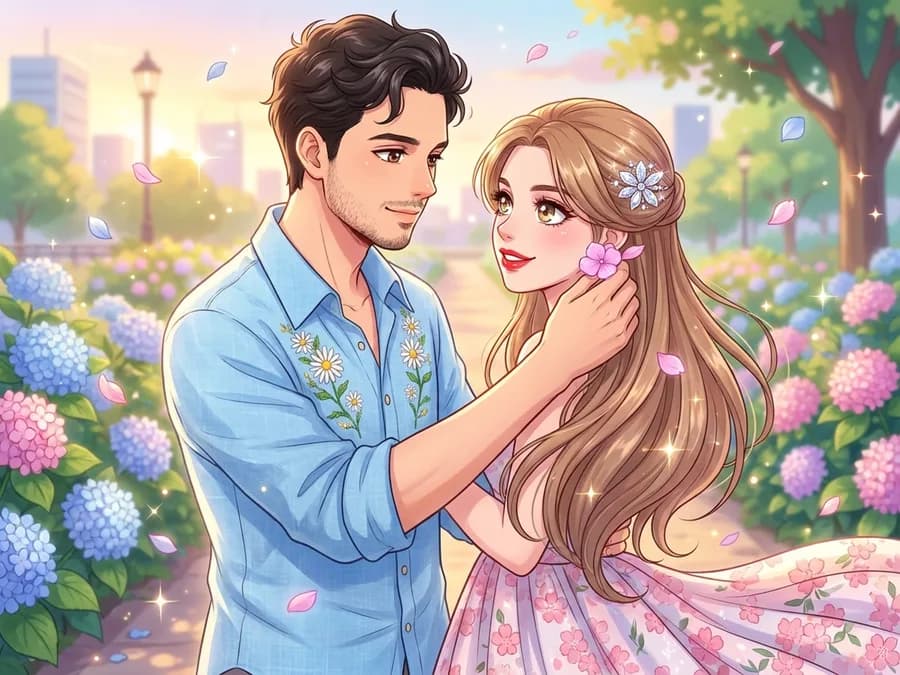
Anime Shoujo
Delicate anime style, sparkling eyes, soft blush and a romantic glow.
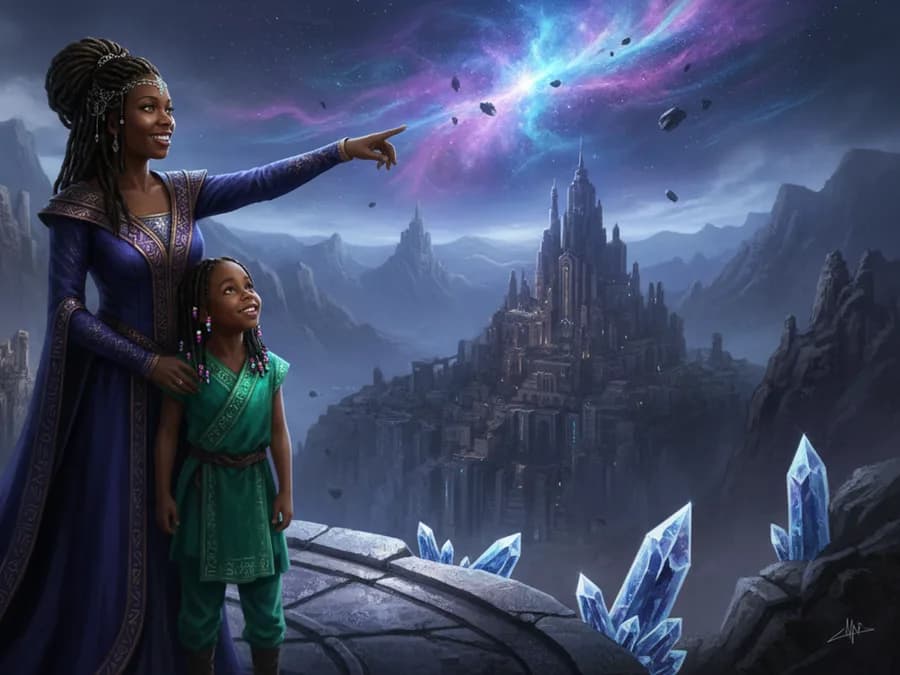
Cinematic
Epic light and painterly drama, your story told like a film's concept art.