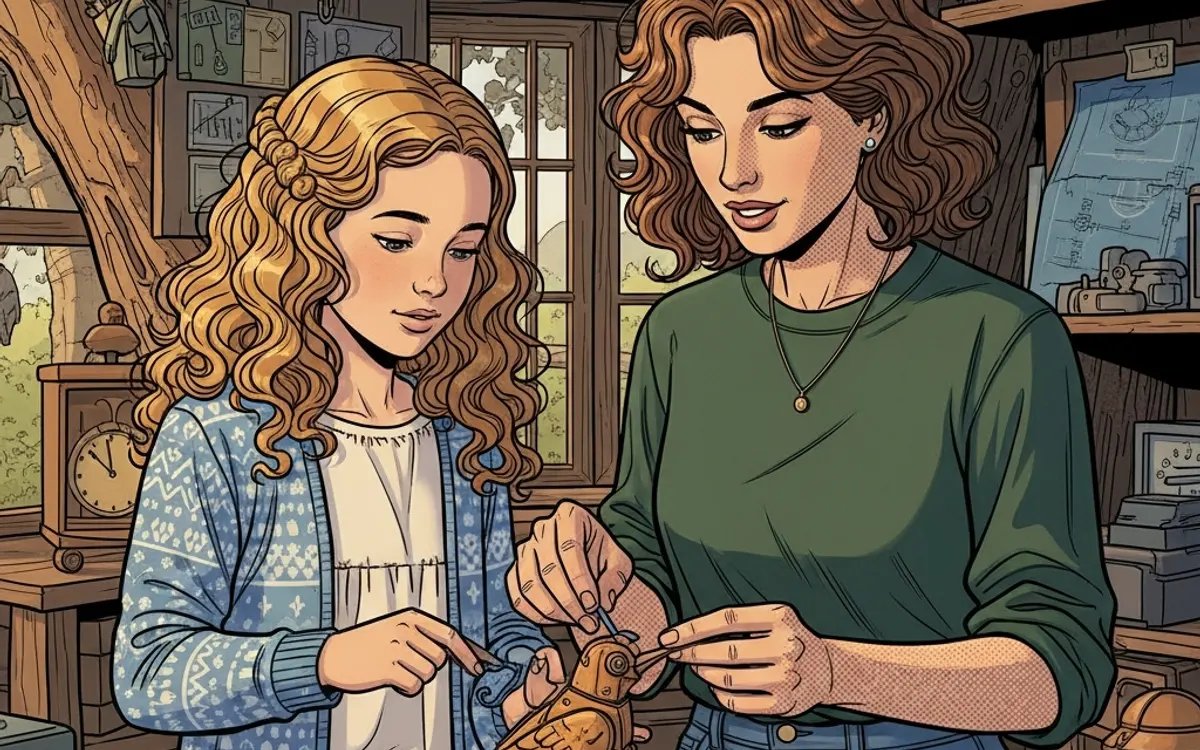
"Don't get me anything." She has said this every year since 2009 and she has never once meant it. What she means is that she does not want another object entering the house without a reason.
That is a reasonable position and most Mother's Day shopping ignores it completely. The flowers die on the Thursday. The candle joins the other candles. The spa voucher expires unredeemed in a drawer with the other spa voucher, because booking it requires an afternoon she does not have.
A personalized Mother's Day gift works on the opposite logic. It is one object, it has a reason, and the reason is written inside it.
Why a book gets past the "nothing" rule
The objection to gifts is usually an objection to clutter, not to being thought about. Nobody dislikes being thought about.
A book is small, it has a shelf, and its entire content is evidence of attention. It is quite hard to read a story about your own life and maintain that you did not want anything. The refusal is aimed at generic gifts and it does not survive contact with a specific one.
"Don't get me anything" means "don't get me a thing." A story is not a thing in the same way.
The material is already in your head
The hardest part of this gift is convincing yourself you have something to write about. You do. It is just so familiar that it does not look like material.
Think about the repeated scenes rather than the big occasions. Birthdays and weddings are documented to death and they are everyone's. What is only yours is the routine: the Sunday drive with the same three arguments, the way she narrated cooking as if being filmed, the particular chair, the phrase she says on the phone before hanging up.
Ask yourself what you would tell someone who had never met her, if you had ninety seconds and wanted them to actually know her. Whatever comes out first is the book.
Things worth sending with the order:
- One scene you both remember differently, which is often the funniest option.
- A phrase she says constantly, quoted exactly.
- The place you associate with her most, in detail.
- What she was like before she was your mother, if you know.
That last one is underused and it produces the best books. Most children have a very thin sense of their mother as a person with her own twenties. Writing a story that takes that seriously tends to land harder than anything sentimental.
What you are ordering, plainly
- One edition: a 30-page hardcover with 13 illustrated spreads, up to six characters.
- The story and the illustrations are AI-generated from your photos and your brief, then reviewed page by page by a person before anything reaches you.
- You read a full digital proof and approve it before anything is printed. Revisions at that stage are normal, not an upcharge.
- Photographs are kept private, never used to train models, and deleted after the book ships.
- The price is on the pricing page.
The proof matters more for this gift than for most, because the failure mode of a Mother's Day book is a story that is warm but not quite her. You will know within two pages whether it is her. If it is not, say so and it gets rewritten.
Siblings, and how to do this together
If there are several of you, resist the urge to write it by committee. Three people submitting memories produces a book that is a list of three people's memories.
The version that works: one person writes the brief, everyone else contributes one scene each, and one of those scenes is chosen. Then everyone signs the dedication page. An extra copy of the same book is cheaper than the first, so a sibling who wants their own can have one without commissioning a second book.
A word about mothers who are not your mother
The category is broader than the greeting cards admit, and this gift handles the edges better than most.
A stepmother who arrived when you were fourteen and did the work quietly. A mother-in-law you actually like, which is a thing that exists. A grandmother who did the raising. A friend in her first year of it who is not being celebrated by anyone because the baby cannot hold a pen yet.
In each of those cases the problem is the same: a card sold in a supermarket cannot say the specific thing, because the specific thing is complicated. A book has room for complicated.
If the book is really about the grandmother end of that spectrum, the grandparent gift page is the better starting point.
Choosing a look
Impressionist is the natural first choice here. It handles light and gardens and kitchens well, which is where most of these stories live, and it flatters photographs that were not taken by a professional.
Watercolour is the softer, more storybook option and the one to pick if the book is going to be read to grandchildren. Art nouveau suits a mother with strong aesthetic opinions and looks deliberate on a shelf rather than sweet. Chalk pastel is quiet and slightly nostalgic, and it works well for a book set mostly in one house.
All twenty-four are on the styles page, and the four above are collected on the Mother's Day gift page.
Timing, since the date does not move
Mother's Day is fixed and printing gets busy around it. Start at least three weeks ahead: about 15 business days from order to door, plus a little room for a round of revisions.
If you are late, order anyway. Print the proof on the day, hand it over with a note, and let the hardcover arrive the following week. Nothing about this gift requires it to be in a box on the correct Sunday, and honestly a present that turns up in the middle of an ordinary week gets a better reaction.
What she will actually do with it
She will read it once, quickly, in front of you, and say something short.
Then she will read it again later on her own, which is the reading that counts, and after that it will live somewhere visible. Books about people get shown to visitors. That is the real difference between this and the candle: one of them gets talked about for years, and it is not the candle.
Where to go next
Gift guide
A Mother's Day Gift Made From Memory →Styles that suit it

Impressionist
Loose brushwork and dappled light, as if your story were painted en plein air.
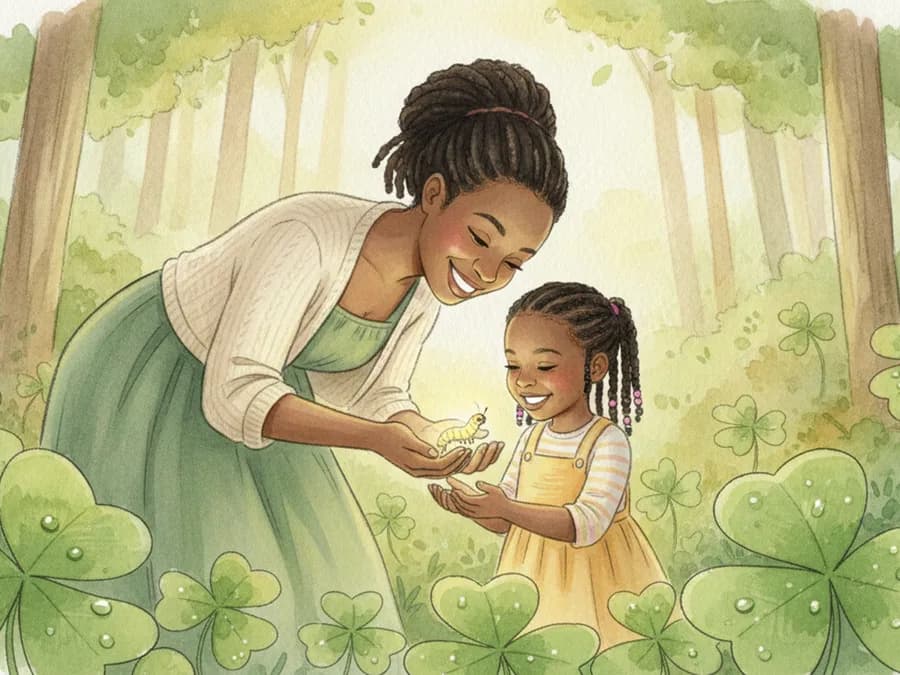
Watercolour Storybook
Soft washes and tender light, the classic picture-book feeling, painted warm.
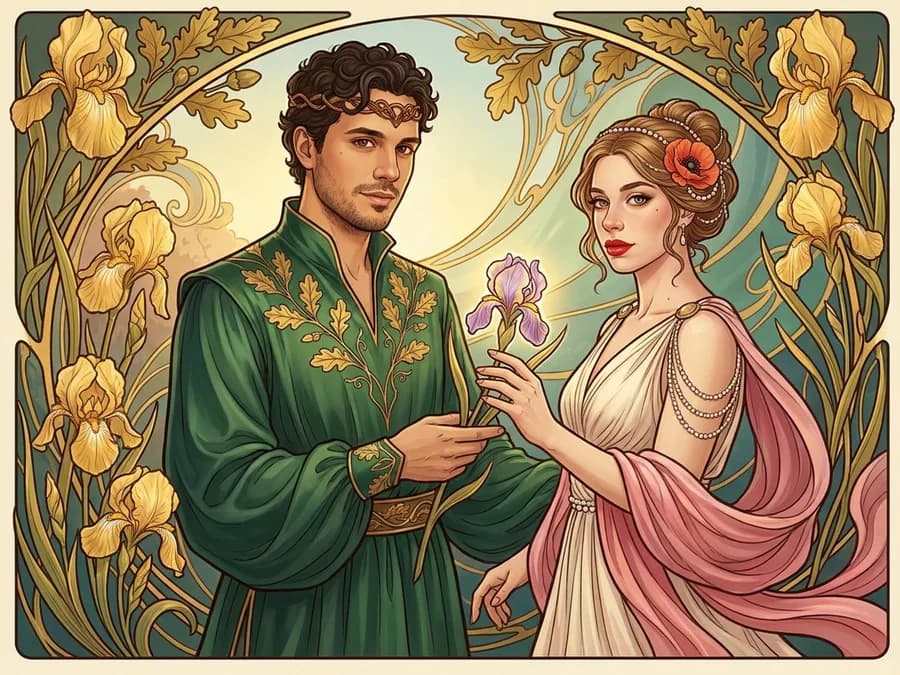
Art Nouveau
Flowing lines, floral borders and gilded elegance from the Belle Époque.