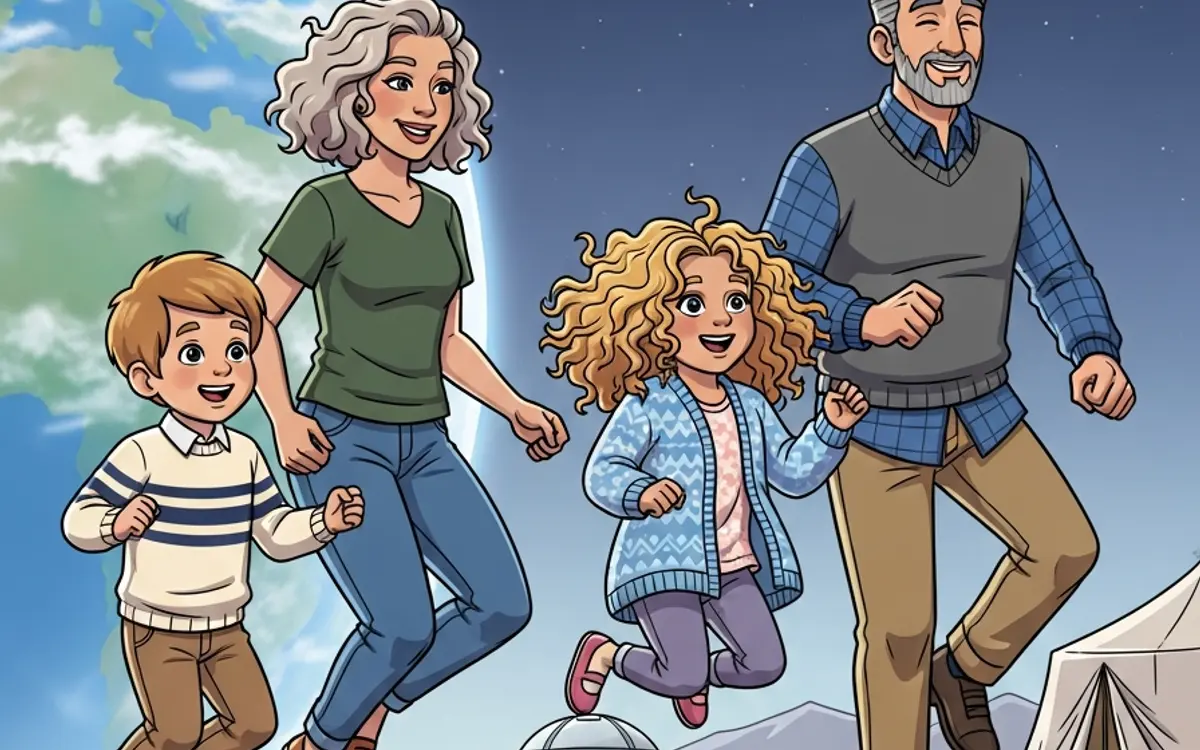
Somewhere between "comic book" and "novel" sits a request that shows up in search bars more often than most people expect: a custom graphic novel, built around a real person, with a real plot instead of a filtered selfie. Not a superhero panel. Not a meme. Something with chapters, or at least the feeling of chapters, that somebody would actually sit down and read twice.
That request is reasonable, and it is also more specific than it sounds. A graphic novel implies pacing, tension, a character who changes across the pages rather than one who just poses on a cover. Getting that right is a different job than slapping a face onto a template, and this guide walks through what the process actually involves, start to finish.
What separates a graphic novel from a comic book, in practice
The words get used interchangeably online, but they point at slightly different instincts. A comic book leans toward event: something happens, somebody reacts, a joke lands, the page turns. A graphic novel leans toward arc: something changes over the course of the story, and the ending means something because of what came before it.
In illustration terms, both usually live in the same visual family at Fableself, ink outlines, bold panels, expressive faces. The comic book style page shows the exact look: colour, halftone shading, and the kind of dynamic composition that suits a story with real incident in it. If you want the quieter, black-and-white register instead, ink and screentone rather than colour, the manga style sits right next door and is worth a look before you commit to a direction.
Neither label changes what actually gets built. A custom graphic novel here is a hardcover storybook with a written narrative and illustrated spreads, not a strip of gag panels. The word choice just tells us what tone you are going for.
How a custom graphic novel actually gets built
Every book starts with a brief, not a template. You send photos of the people involved and a handful of details: how they met, what they argue about, the trip that went wrong, the year that mattered. That material becomes a short story, written specifically around those people, and the artwork is generated to match scenes in that story rather than to match a stock layout.
The finished book is one edition: 24 pages, 10 illustrated double-page spreads, hardcover, built around up to three characters. Both the text and the images are produced with AI from what you send in, and every single page then gets checked by a person before it reaches you as a proof. You read the whole thing and approve it before any payment is taken. Nothing ships, and nothing gets charged, until you say the proof is right.
That order matters more than it sounds like it should. A lot of "custom" products online reverse it: you pay first, then discover whether the result resembles what you pictured. Here the proof comes before the payment, so there is nothing to be disappointed by after the fact.
A page you have not approved is a page that has not been paid for.
What to prepare before you start the brief
The single biggest lever on quality is not the art style. It is the photos and the details you provide.
- Send a handful of clear, well-lit photos rather than one perfect one. Different angles help the illustration hold up across ten spreads.
- Write down three or four specific memories, not a general description of the relationship or the person. "The bus that broke down outside Denver" beats "we've been friends forever" every time.
- Decide on a single throughline before you write anything else. A graphic novel about "everything" reads like nothing. One trip, one year, one running joke, told properly, outperforms a highlight reel.
- Pick the tone on purpose. A birthday book for a ten-year-old and an anniversary book for a couple should not be pulling from the same visual register, even inside the same style family.
Timeline and price, without the guessing
A custom graphic novel is not instant, and it should not be. The proof takes a few days to prepare once your brief and photos are in, and then printing and shipping add more time on top of an approved proof. If there is a date on the calendar, birthday, graduation, an anniversary, build backward from it and leave room for a revision round rather than approving something you only half like because the date is close.
Current pricing lives on the pricing page rather than repeated here, since it is the page that stays accurate as things change. What is worth knowing up front: a second copy of the same finished book, for a sibling or a parent, costs less than the first one, because only the printing repeats rather than the whole production.
Occasions this actually suits
A comic-style graphic novel earns its keep at moments that already have a story attached, not moments that just need a gift. Graduations are the clearest case: four years condensed into ten spreads, with the graduate as the one who overcame something rather than the one accepting a card. The graduation gift page goes deeper into that pairing.
Couples use the same format differently, less about triumph and more about the ongoing joke that has lasted years, the apartment, the road trip, the thing one of them still has not lived down. The anniversary gift page covers that angle if that is closer to what you are picturing.
Either way, the format flexes to the register you actually want. It does not have to be capes and a city skyline. It just has to have somebody at the center of a story that goes somewhere.
The facts, in one place
If you just want the specifics without reading the rest: the book is a single edition, 24 pages, 10 illustrated spreads, hardcover, up to three characters. Payment happens after you approve the digital proof, not before. Photos are kept private and deleted once the book ships. There is no separate digital-only version for sale, only the printed hardcover. A second copy of the same story costs less than the first, since only printing repeats.
Getting started
The order form walks through the brief, the photo upload, and the style choice, and it takes about as long as any longer web form. If you want the mechanics first, from brief to proof to printed book, the how it works page lays out every step in order.
A custom graphic novel, done properly, is not a filtered photo with a caption. It is a written story, a chosen art style, and a proof you get to approve before a single page gets printed. That is the whole difference between ordering one and just generating one, and it is worth knowing before you type the search term into a box and start comparing prices across products that are not actually the same thing.