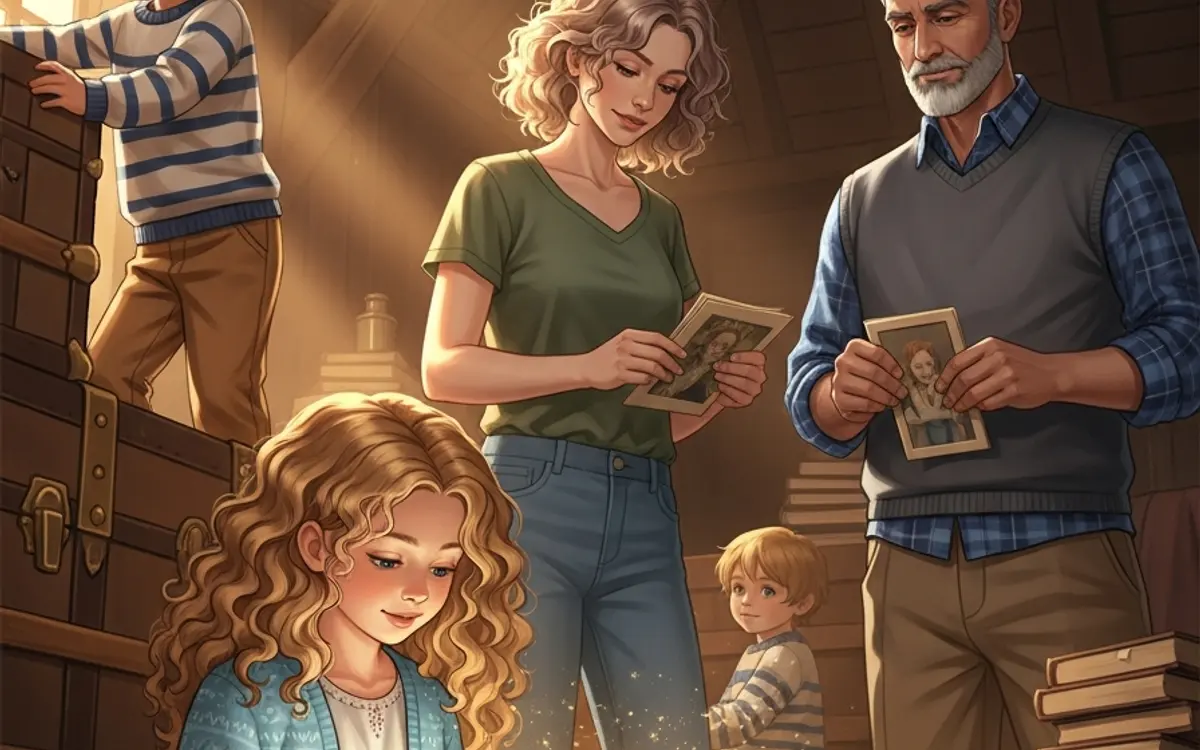
The photographs survive. That is the strange cruelty of it. Six hundred pictures of your grandmother sit in a folder on someone's laptop, perfectly preserved, and not one of them tells you that she called everyone "love" including the plumber, or that she kept the good scissors in the third drawer and defended them with her life.
Photographs preserve faces. They are very bad at preserving people.
A memorial storybook is an attempt at the other thing. It takes a handful of those photographs and puts them inside a written account of who the person actually was, so that the thing you hand your children twenty years from now is not an archive to be sorted but a book to be read.
What a memorial book is not
It is not a funeral programme, and it is not a photo album with captions. Both of those are about the fact of a death. A memorial storybook is about the fact of a life, which is a different assignment and, oddly, an easier one to get right.
It is also not a biography. Nobody wants to read a chronology of someone they loved. Born here, worked there, survived that. The dates are already on a stone somewhere. What is not written anywhere is the way he pronounced "aluminium" wrong on purpose for forty years because it made his daughter laugh the first time.
A death certificate records that someone existed. A memorial book records what it was like when they did.
The books that work are narrow. One relationship, or one recurring scene, or one year that mattered. A whole life told at speed becomes a list. A single Sunday told properly becomes a person.
Gathering the material, when you are not in a state to gather anything
This is the honest problem. Memorial books get commissioned in the six weeks after a funeral, which is exactly when nobody can hold a thought for longer than a minute. So keep the gathering small and mechanical.
Ask three people, not thirty, for one memory each. Ask them for a scene rather than an adjective. "She was so generous" is unusable. "She would post a card that just said 'saw this and thought of you' with no explanation of what she saw" is a whole page.
Then find four or five photographs. Not the best ones. The useful ones: a clear face, ordinary light, ideally at the age you want the book to hold. Scanned prints from an album are fine, even soft ones, because the photograph is not copied literally, it is used as reference for the artwork.
A few practical points about how ours work, so you know what you are agreeing to:
- One edition: a 30-page hardcover with 13 illustrated spreads, up to six people in the story.
- The story and the illustrations are AI-generated from what you send, then read and corrected page by page by a person before you see anything.
- You approve a full proof before anything is printed. If it is wrong, it gets rewritten or redrawn at the proof stage.
- Photographs are stored privately, never used to train models, and deleted after the book ships.
- The price is on the pricing page, and it does not change because the occasion is a sad one.
That fourth point matters more here than anywhere else on this site. A proof is a mercy when the subject is grief. You do not have to trust a stranger with your mother's face and then hope. You read the whole book first.
What to leave out
Two things, usually.
The illness. Unless the illness was genuinely the story, and sometimes it was, the last eighteen months tend to swallow the other seventy years. Many families discover in the proof stage that they had written a book about a hospital. Cutting that is almost always the edit that makes the book readable.
And the eulogy voice. The register of a funeral is public and slightly formal, and it is the wrong register for something a nine-year-old will read alone in ten years. Write it the way you would tell it at a kitchen table, with the parts that are funny left funny. Grief does not require solemnity all the way through. Most people's memories of the dead are, blessedly, quite funny.
Choosing how it should look
Style does real work in a memorial book. The soft ones keep it tender; the older-looking ones give it the weight of a document.
Watercolour reads as memory, slightly out of focus at the edges, which is how most of us actually remember people. Vintage engraving gives a book a heirloom quality that suits someone born in the 1930s better than anything modern would. Impressionist works well for a person you associate with a place, a garden, a coastline, a particular kitchen at a particular hour. Pencil sketch is the quietest of the four and is often the right answer for a book about a parent, where anything more decorative would feel like too much.
You can look through all of them on the styles page, or start from the four we suggest on the memorial storybook page.
Who the book is actually for
Ask this before you start, because the answer changes the book.
If it is for the surviving spouse, the book should be about the marriage, and it can be intimate to the point of being useless to anyone else. That is fine. That is the correct outcome.
If it is for grandchildren who were too young to remember properly, it should be about the person as a character. What they did, what they said, what the house smelled like. Something a child can hold on to instead of a face they half remember.
If it is for you, be selfish about it. Put in the argument you never resolved. Put in the thing you wish you had said. A book you made in order to say something is a legitimate book.
When to make it
There is no correct interval and anyone who tells you otherwise is guessing. Some families order in the first month because the details are still sharp and the doing is a relief. Others wait a year, until the first anniversary, when the fog lifts enough to think about shape rather than survival.
The one practical note: it takes about 15 business days from ordering to a book in your hands, with the proof arriving in the first days of that. If you are aiming at a specific date, an anniversary or a scattering or a family gathering, start a month before it and give yourself room to sit with the proof rather than rushing an approval.
The part nobody warns you about
The proof will make you cry, and this catches people off guard, because they were braced for the finished book and not for a PDF on a Tuesday afternoon.
That is usually the sign it worked. A book that does not do that is a book that stayed general. If the proof leaves you calm, ask for another pass and send more specific memories, the odder the better. Specificity is the whole thing. The scissors in the third drawer. The card that said "saw this and thought of you."
That is what survives, and it is what six hundred photographs cannot say.
Where to go next
Gift guide
A Memorial Storybook to Keep Their Story Alive →Styles that suit it
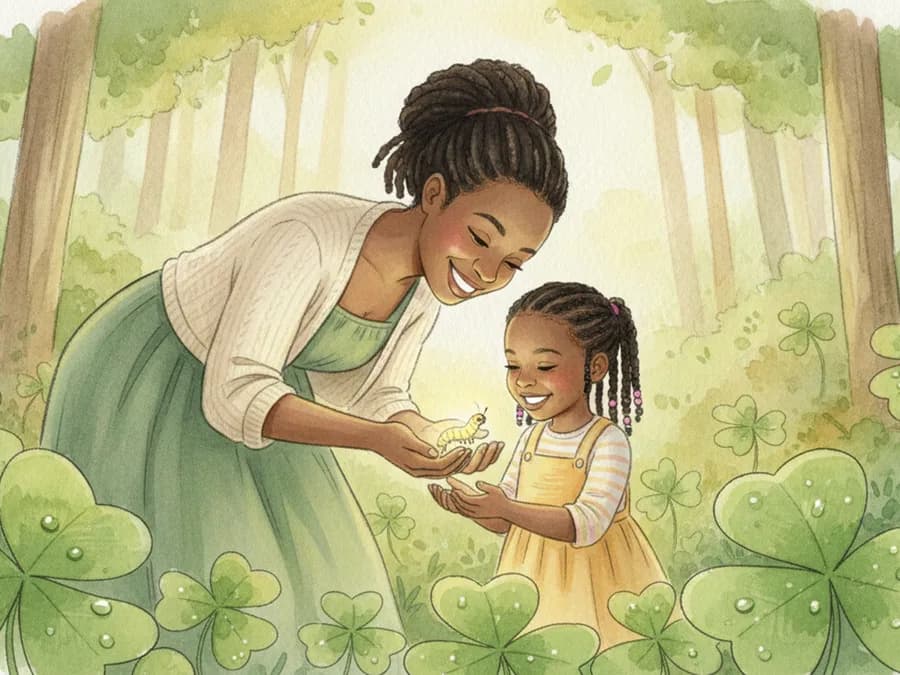
Watercolour Storybook
Soft washes and tender light, the classic picture-book feeling, painted warm.
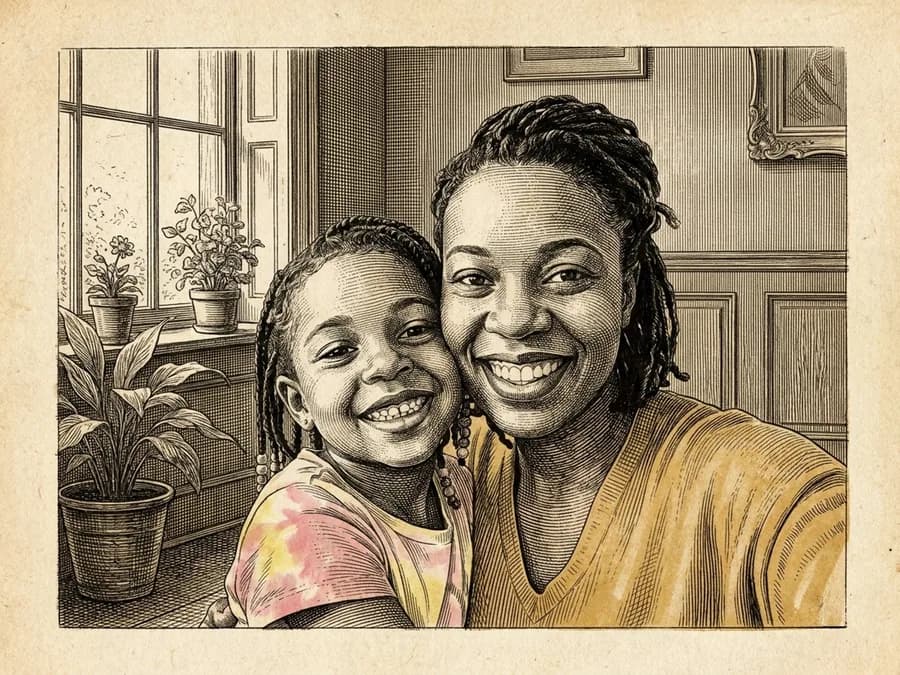
Vintage Engraving
Fine etched lines and sepia tones, like a treasured book from another century.
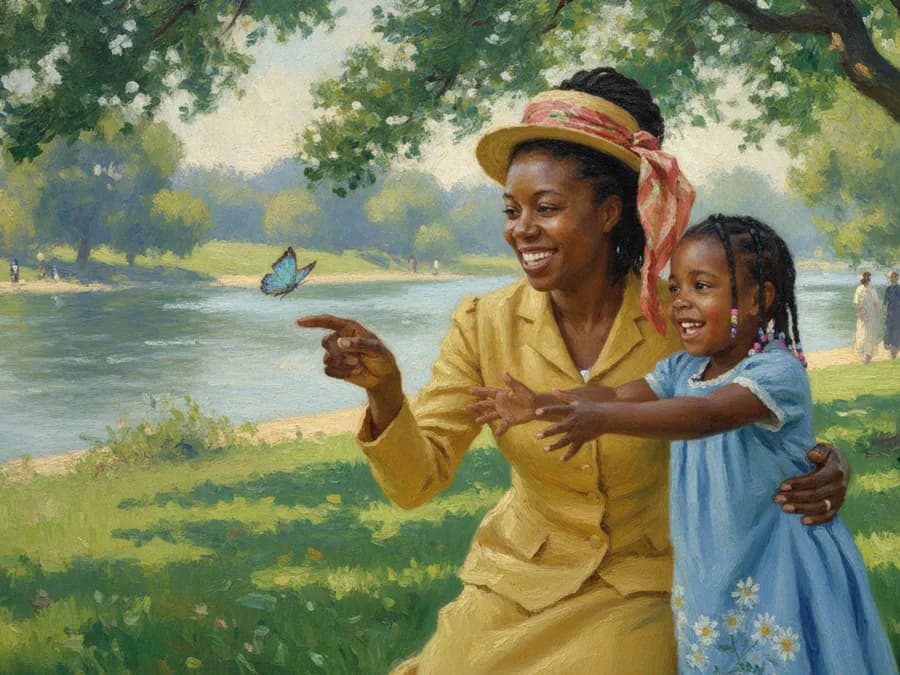
Impressionist
Loose brushwork and dappled light, as if your story were painted en plein air.